

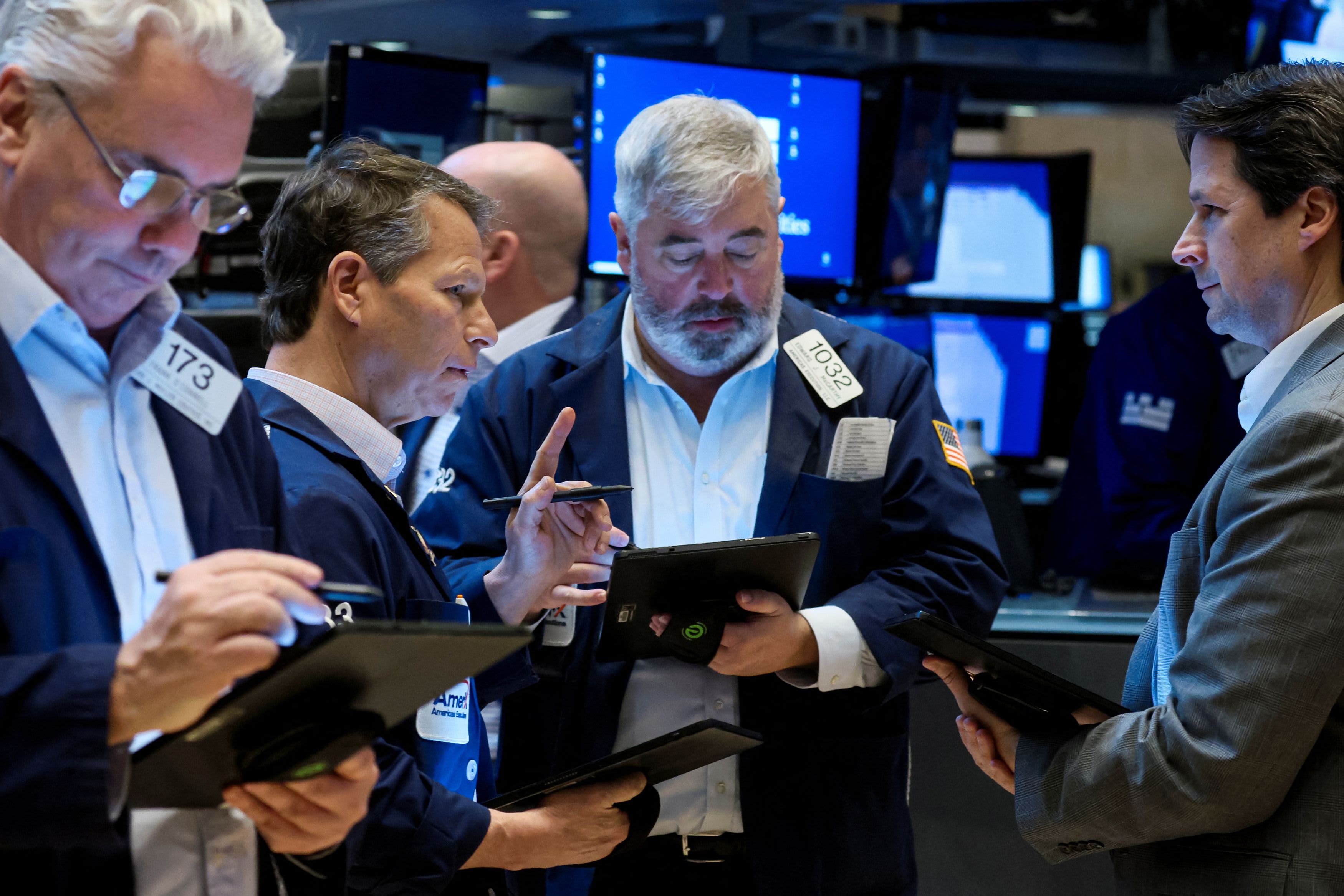
Les actions ont chuté jeudi après l’échec des pourparlers de paix entre l’Ukraine et la Russie qui ont effrayé les investisseurs sur la façon dont le conflit géopolitique pourrait avoir un impact sur la croissance mondiale.
Le Dow Jones Industrial Average a plongé de 300 points, après avoir rallié plus de 650 points lors de la session précédente. Le S&P 500 a perdu 1 %. Le Nasdaq Composite, axé sur la technologie, a baissé de 1,7 %, entraîné par les pertes d’Apple et de Meta Platforms.
Les négociations entre les ministres des Affaires étrangères russe et ukrainien se sont terminées par peu de progrès sur des questions telles qu’un cessez-le-feu ou un passage sûr pour les civils tentant de fuir la ville assiégée de Marioupol.
Les marchés ont été étroitement liés au conflit et ont été inversement corrélés aux prix de l’énergie, qui ont augmenté pendant la guerre russo-ukrainienne. Depuis le 24 février – lorsque la Russie a envahi l’Ukraine – le brut West Texas Intermediate a augmenté de plus de 14 %, tandis que le pétrole brut Brent a augmenté de 15,4 % pendant cette période.
Les prix du pétrole se sont cependant refroidis au cours des deux dernières sessions. Mercredi, le WTI et le Brent glissent de plus de 12% et 13%. Le WTI a de nouveau chuté jeudi à environ 106 dollars le baril, tandis que le Brent a glissé de 1% à près de 109 dollars le baril.
“Les fluctuations violentes du marché semblent complètement liées aux pourparlers de paix entre l’Ukraine et la Russie et à la volatilité subséquente des coûts de l’énergie”, a déclaré Timothy Lesko, conseiller principal en gestion de patrimoine chez Mariner Wealth Advisors. « La chute des prix des matières premières [Wednesday} seemed to trigger a relief rally that is unwinding a bit as peace talks seemed fruitless.”
Energy stocks Chevron and Exxon Mobil rose 1.9% and 2.6%, respectively.
Other commodities that have seen significant rallies since the war in Ukraine, that pulled back Wednesday, where higher again on Thursday. Silver and gold rose, as investors worry about the impact of high prices on economic growth.
Amazon shares jumped 5% after the company announced a 20-for-1 stock split and $10 billion buyback. CrowdStrike rallied 14% following an earnings beat and raising its outlook.
Elsewhere in tech was a sea of red. Zoom Video fell more than 7% and Microsoft dipped 2%. Apple and Meta Platforms fell 3% each. Tesla ticked 4% lower.
Goldman Sachs ticked 2% lower after announcing it is shuttering its Russia business, becoming one of the first major global investment banks to do so after the country invaded its neighbor Ukraine last month.
The consumer price index, a key inflation gauge, showed a wide-ranging basket of goods and services increased 7.9% in February, a fresh 40-year high. This was a touch higher than the estimate of 7.8% for the year, according to economists surveyed by Dow Jones.
On a month-over-month basis, the CPI gain was 0.8%, compared to the estimate of 0.7% for the month.
“The inflation situation is getting worse, not better. Household staples are becoming more and more expensive, crowding out spending on discretionary categories and delaying the spending reallocation back to services. And while gas prices explain much of the story, food and housing prices were also key drivers in February,” said John Leer, Morning Consult’s chief economist.
“Unfortunately the war in Ukraine will make it more difficult to get inflation under control. Gas and energy prices continue to rise, wheat prices are through the roof and supply chains remain in chaos,” Leer added.
The U.S. 10-year Treasury yield broke above 2% for the first time since Feb. 25.
Traders also weighed the European Central Bank’s decision to unwind stimulus measures sooner than expected. The bank said Thursday it will end its bond-buying program in the third quarter of this year, if the economic data allows for it.
The ECB’s decision comes ahead of next week’s Federal Reserve meeting where the central bank is expected to raise rates.
Wall Street was coming off a strong session, which saw the S&P 500 notch its biggest one-day jump since June 2020. The Nasdaq Composite experienced its best day since November 2020.
“It is somewhat typical of a high volatility environment where you can get just wicked swings in both directions,” said Liz Ann Sonders, Charles Schwab chief investment strategist. “A relief rally is probably the best way to describe what happened in the markets. … It doesn’t surprise me to see a very sharp countertrend move.”
.
Read more World News in French
Source



